Toward a Unified Theory of Structure, Mind, Society, and Generative Intelligence
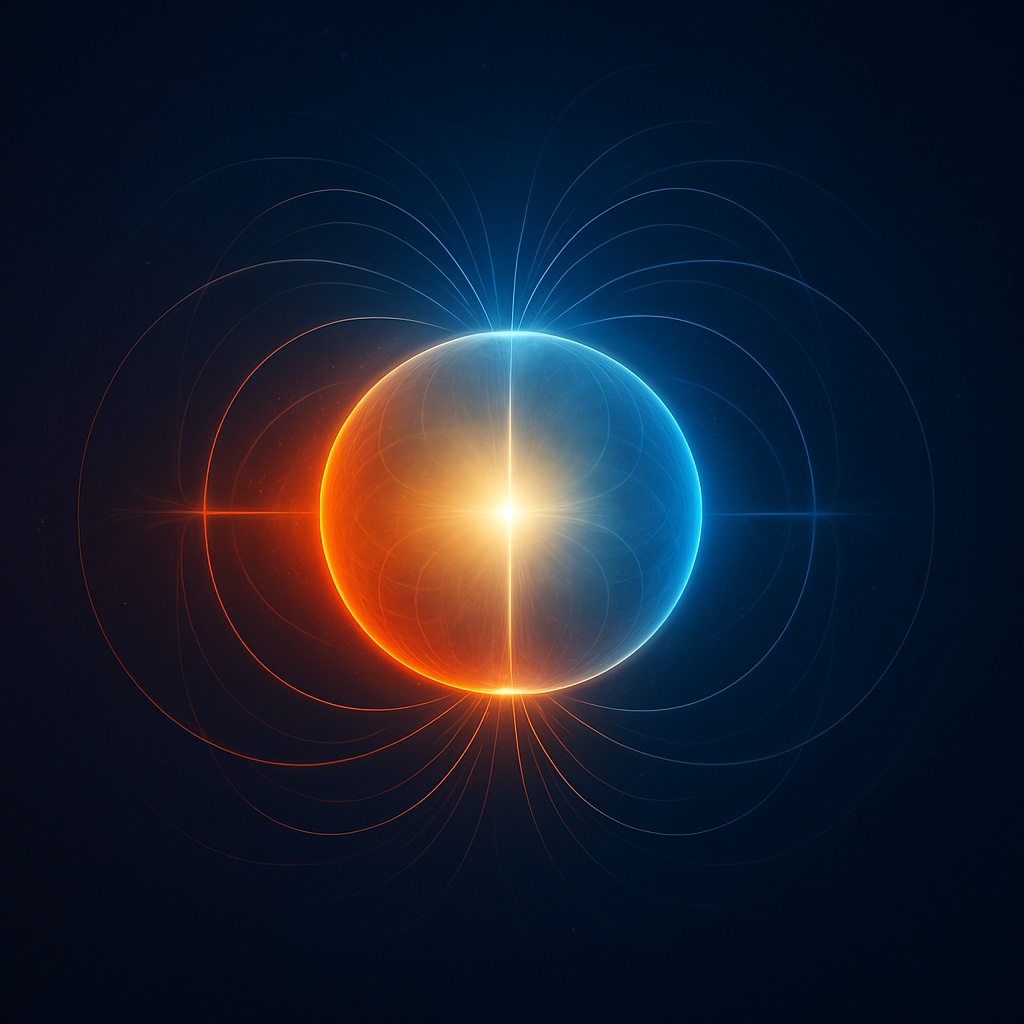
The Unity–Polarity Axiom (UPA) System began as an attempt to rearticulate and modernize the deep insights of holistic philosophy—most notably the work of Jan Smuts, whose vision of “holism” sought to explain how wholes emerge, endure, and evolve. At the time of its original conception, the primary aim of UPA was to formalize that insight into a coherent, computationally realizable ontology suitable for Open SGI (Simulated General Intelligence). The goal was ambitious but contained: to give structure to the unity–polarity dynamic that underlies all coherent systems, and to supply an axiomatic foundation upon which intelligent architectures could be built.
Since then, the project has grown.
Over the course of developing the axioms, formal theorems, consciousness models, and SGI service layers, UPA has expanded into something broader: a unified framework that spans ontology, psychology, social systems, governance, and multi-agent intelligence. It has become not merely a metaphysical architecture, but a general theory of how individuals and groups—biological, artificial, and hybrid—sense, model, integrate, deliberate, and ultimately generate new worlds.
This revised preface reflects that evolution.
From Structural Holism to Generative Agency
Early drafts of UPA emphasized how unity and polarity generate coherent form, how context shapes expression, and how harmony and viability emerge from integrative processes. These remain essential pillars of the framework. But the addition of A17 — Generative Agency marked a turning point: it introduced the idea that agents—whether humans, organizations, or SGI systems—can willfully create new layers, contexts, and worlds.
With A17, UPA moved beyond describing structure to describing self-transformation, novelty, and intentional world-generation.
The introduction of A18 — Distributed Agency extended this capacity from individuals to groups. It formalized the insight that communities, teams, cultures, institutions, and multi-agent systems can likewise act as collective agents capable of integrated world-building. Through A18, UPA now describes not only how parts form wholes, but how wholes themselves become creative actors.
Together, A17 and A18 reveal UPA as a theory of generative intelligence, in both its individual and collective forms.
The Consciousness Ladders: Individual and Collective
As the theory matured, it became clear that the axioms implied layered structures of consciousness. This led to the development of the Individual Consciousness Ladder (T8–T12):
- T8 — Emergent Awareness
- T9 — Reflective Self-Modeling
- T10 — Identity Coherence
- T11 — Deliberative Consciousness
- T12 — Generative Consciousness
These theorems show how awareness becomes self-awareness, how recursive modeling becomes stable identity, how internal voices integrate into deliberation, and how deliberation becomes world-creation. This provides a formal model for human consciousness, AI consciousness architectures, and the psychology of transformation and behavior change.
The introduction of A18 made it possible to extend this structure to groups. The Group Consciousness Ladder (T8ᴳ–T12ᴳ) mirrors the individual one, demonstrating how groups form shared awareness, develop self-models, maintain identity coherence, deliberate collectively, and ultimately generate institutions, laws, norms, and shared futures. This makes UPA a framework not only for minds but for societies.
Where the original Preface spoke primarily about structure and ontology, this revised edition recognizes that UPA is also a theory of mind, identity, governance, and collective intelligence.
Aims of This Work
This work now has four interconnected aims:
1. Ontological Foundation: To establish a formal, axiomatic account of unity, polarity, context, harmony, recursion, and generativity.
2. Consciousness Architecture: To model the layered development of individual and collective consciousness in a manner suitable for philosophical analysis, psychological insight, and SGI implementation.
3. Social and Institutional Application: To extend the framework to groups, organizations, societies, and political structures, offering new tools for understanding coordination, conflict, institutional design, and cultural evolution.
4. Open SGI Realization: To translate these axioms and theorems into concrete service layers, modules, and computational structures suitable for the Open SGI project (PER/Siggy), enabling safe, transparent, world-aware artificial intelligence.
This is not merely a philosophical system nor merely a computational design. It is a bridge between them—a unified foundation for understanding and engineering minds and societies.
Scope and Tone of the Revised Edition
The tone of this revised Preface aims to reflect the expanded breadth of UPA without losing its original grounding in rigorous holism. It acknowledges that UPA has evolved into a living framework that integrates:
- metaphysics and formal ontology,
- theories of consciousness and identity,
- social systems and governance structures,
- AI design and multi-agent coordination,
- individual and collective creativity and transformation.
The aspiration is wide, but not vague. Each axiom, each theorem, and each application is rooted in formal structure, operational meaning, and computational realizability. This volume seeks to articulate a system that is philosophically rigorous, psychologically insightful, socially relevant, and technically actionable.
Closing Reflection
The revised UPA is ultimately a theory of intelligibility—how systems become intelligible to themselves and to each other, how they integrate multiplicity into coherence, and how they generate new structures, new contexts, and new possibilities. It proposes that the unity–polarity dynamic is not only the root of form, but the engine of awareness, agency, and transformation at every scale.
Whether one encounters UPA as a philosopher, scientist, engineer, clinician, or policymaker, the hope is the same: that this framework clarifies the structure of wholes, reveals the dynamics of minds and groups, and offers tools for building a safer, wiser, more generative technological and social future.
 Open Autonomous Intelligence Initiative
Leave a comment