Harmony Metrics & Viability Regions in Sⁿ
Parts 1–9 established UPA geometry through polarity, multi-axis structure, learning on curved manifolds, certification invariants, multi-agent geometries, novelty/emergence, hierarchical embeddings, and context modulation. Now we reach the central evaluative concept of UPA geometry: harmony—the scalar or vector measure of viability, stability, balance, and integrative coherence.
A15 (Harmony) states:
Systems maintain viability only when the balance across active polarity axes remains above a domain-specific threshold.
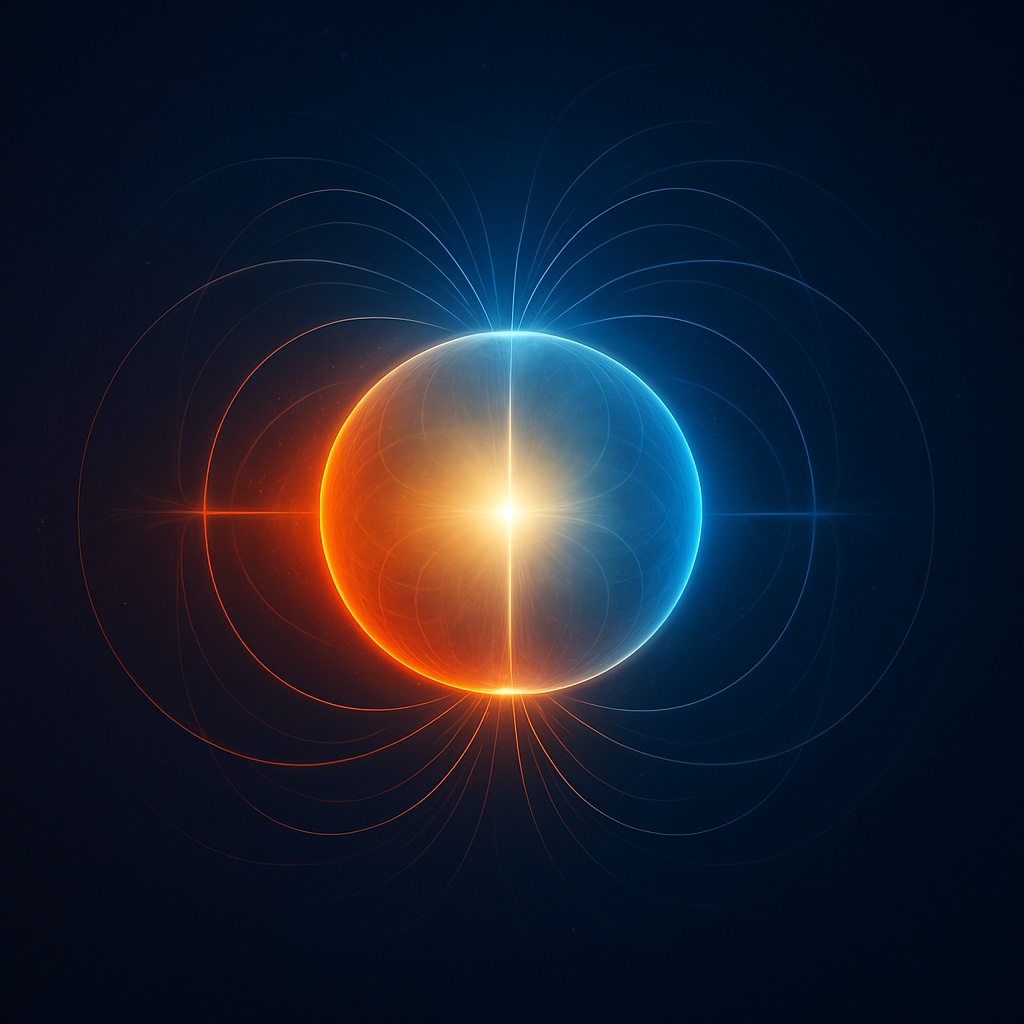
In geometric terms, harmony is measured as angular balance across Sⁿ.
This post formalizes:
- harmony metrics,
- multi-axis viability envelopes,
- composite harmonic functions,
- region-specific rules,
- and how SGI uses these for safety and reasoning.
1. What Is Harmony in UPA Geometry?
Harmony is not emotional harmony.
It is not moral agreement.
It is not group cohesion.
Harmony is a mathematical measure of how balanced a semantic state is relative to its active poles.
Given state x on Sⁿ:
- each polarity axis contributes an angular distance component,
- weights reflect contextual relevance (A7),
- local laws adjust regional contributions,
- composite functions produce a scalar or vector score.
Harmony measures how well a system maintains multi-axis viability.
2. Angular Harmony Metrics: The Core Measure
For a single polarity axis with poles p and σ(p):
Harmony can be measured as:
- midpoint proximity (distance to π/2),
- dual-angle balancing (θ₁ ≈ θ₂),
- deviation from the great-circle median.
For multi-axis structure:
- each axis i has angular contribution θᵢ,
- harmony integrates these into a global score.
Angular metrics are:
- intrinsic to the manifold,
- invariant under coordinate choice,
- interpretable,
- stable.
3. Axis-Weighted Harmony: Context Shapes Viability
Context (A7) modulates the relevance of each axis.
Weights wᵢ(C):
- amplify relevant axes,
- attenuate irrelevant axes,
- enforce situational constraints.
Examples:
- Social context: belonging/autonomy weighted heavily.
- High-risk context: safety/performance dominates.
- Intellectual context: abstraction/concretion leads.
Harmony becomes:
H(x|C) = Σ wᵢ(C) · hᵢ(x)
This yields flexible yet controlled semantic evaluation.
4. Composite Harmony Functions: Beyond Scalar Scores
Harmony can be:
Scalar (global viability)
- single score representing overall balance,
- compared against global threshold θ.
Vector-valued (axis-level diagnostics)
- one score per axis or cluster,
- used for interpretability and debugging.
Region-specific (local harmony laws)
- modified within defined semantic regions,
- enforcing contextual viability.
Composite functions allow both:
- coarse evaluation (safety),
- fine evaluation (interpretability).
5. Viability Regions on Sⁿ: Global and Local Safety Zones
A viability region is a subset of Sⁿ where:
- harmony exceeds minimum thresholds,
- axes remain within safe angular limits,
- context constraints are satisfied.
Viability regions may be:
- spherical bands,
- high-dimensional shells,
- regionally defined neighborhoods,
- attractor-centered basins.
Crossing viability boundaries triggers:
- correction,
- projection,
- re-anchoring,
- context escalation.
This is geometric safety enforcement.
6. Local Harmony Laws (from Part 9) Refine Global Harmony
Local harmony laws modify H(x) within specific regions.
Examples:
- In “Analytic Quadrant,” abstraction/concretion axis gains sharper viability curve.
- In “Innovation Ridge,” novelty thresholds increase.
- In “Stability Basin,” extreme axes are penalized.
Local laws ensure that:
- specialized tasks maintain their norms,
- domain-specific semantics remain coherent.
7. Harmony Gradients: Direction of Improvement
Harmony defines a scalar field on Sⁿ.
The gradient ∇H(x):
- points toward balanced configurations,
- shapes learning trajectories (Part 4),
- helps SGI decide which adjustments improve viability,
- supports interpretability by showing why the system moved.
A harmony gradient is the geometric equivalent of homeostasis.
8. Basin-Based Viability: Stability Clusters
Basins contain attractors representing stable, balanced states.
Harmony within a basin:
- increases as one approaches the attractor,
- decreases near basin edges.
Basins represent:
- personality tendencies,
- identity centers,
- stable policies,
- cultural centers of gravity.
SGI uses these for:
- stable preference modeling,
- explainable reasoning,
- resilient planning.
9. Multi-Agent Harmony: Shared Viability Across Systems
When agents interact, harmony evaluates group-level viability.
Group harmony includes:
- alignment of axes,
- viable overlap of regions,
- mutual stability of basins.
This is how:
- group identity coherence (T10ᴳ),
- deliberative group consciousness (T11ᴳ),
- generative group capability (T12ᴳ)
are evaluated geometrically.
Group harmony measures whether the group is “balanced enough” to act coherently.
10. Harmony in Human–SGI Alignment
SGI must track:
- human harmony profiles,
- contextual harmony shifts,
- cross-agent viability,
- region-level safety zones.
Harmony ensures:
- SGI never pushes a user into psychological imbalance,
- user preferences remain viable,
- machine behavior remains interpretable.
Harmony becomes the mathematical backbone of ethical alignment.
11. Safety via Harmony Thresholds
Harmony thresholds enforce:
- bounded behavior,
- prevention of extreme polar positions,
- avoidance of pathological attractors.
When harmony drops too low:
- learning slows or halts,
- SGI reverts to coarse-level reasoning,
- novelty is temporarily disabled,
- corrective projection occurs.
This ensures SGI remains stable under all conditions.
12. Summary
Part 10 formalized harmony as a geometric invari-ant and viability measure:
- angular harmony metrics,
- axis-weighted relevance,
- composite functions,
- viability regions,
- local harmony laws,
- harmony gradients,
- multi-agent harmony,
- human–SGI alignment.
Harmony is not an afterthought. It is:
- the evaluative core of UPA,
- the stability metric of Sⁿ,
- the safety envelope for SGI,
- the diagnostic tool for multi-agent coherence,
- the bridge between structure and behavior.
It completes the evaluative tier of UPA geometry.
Next in the Series: Part 11 — Geodesics, Path Dynamics & Semantic Motion
Part 11 will introduce:
- geodesic paths,
- path cost & harmonic budgets,
- context-driven path deformation,
- novelty-enabled trajectories,
- and dynamic semantic kinematics.
Ready for Part 11?
 Open Autonomous Intelligence Initiative
Leave a comment