From Heraclitus to Hegel, Taoism to Nishida — and Why UPA Makes Polarity Continuous, Non-Conflictual, and Structurally Precise
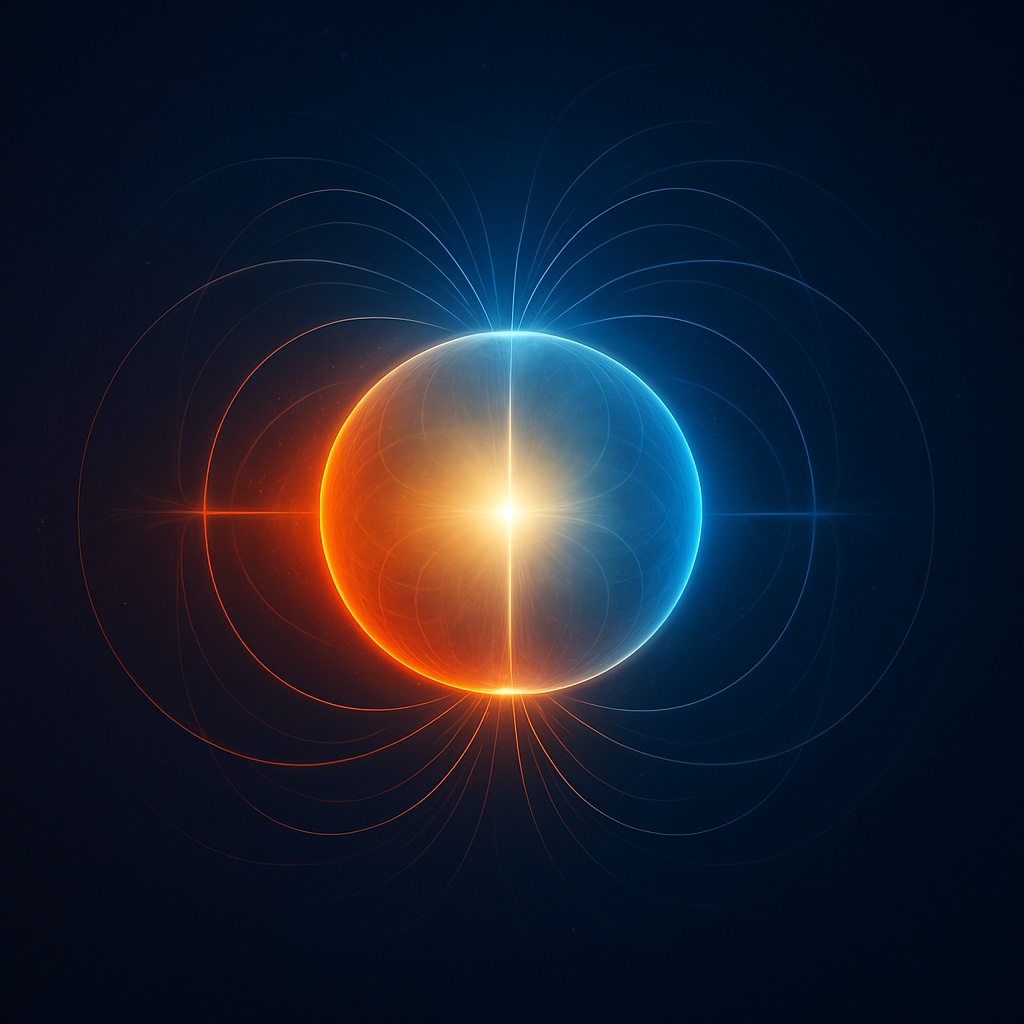
Humanity has long recognized that opposites are not merely sources of tension but the generative architecture of reality, mind, and meaning. Philosophers across cultures and centuries have described this insight with remarkable consistency.
The Unity–Polarity Axioms (A1–A2) of the UPA framework does not merely echo these insights — it formalizes them into a mathematically coherent, continuous, testable structure that can support:
- consciousness modeling,
- group-level deliberation,
- generative agency,
- and Open SGI architectures.
This post expands in detail how UPA’s polarity principle relates to and advances several major philosophical traditions.
1. Polarity in UPA: The Structural Heart of Differentiation
UPA states:
- A1 Unity: A single coherent system.
- A2 Polarity: Differentiation into complementary aspects.
Every system that exhibits structure, change, identity, or meaning expresses polarity. But unlike many classic expressions of opposites, UPA defines polarity as:
- non-conflictual (opposites are not enemies),
- continuous (opposition is a graded relationship),
- productive (opposites generate coherence when integrated),
- context-bound (A7: meaning of each pole depends on setting),
- integrable (A14–A16: poles can be harmonized),
- recursive (A11: opposites reappear at every scale),
- agency-relevant (A17–A18: agents generate new polar frameworks).
This moves polarity from metaphysical speculation to practical architecture.
2. Heraclitus: Tension as Generative Order
Classical View
Heraclitus famously wrote that:
“Opposition brings concord. Out of discord comes the fairest harmony.”
He saw tension between opposites—hot/cold, night/day, war/peace—as the source of becoming.
Resonance with UPA
UPA agrees that opposites are generative. Specifically:
- Opposites define each other (A2).
- Their interaction produces higher-order coherence (T1).
- Tension is not destructive but productive.
UPA’s refinement
Heraclitus lacked a formal mechanism for how tension generates order.
UPA supplies it:
- Harmony (A5) establishes viability conditions.
- Recursive Coherence (T3) explains how tension organizes across scales.
- Integration Axioms (A14–A16) give precise structures for synthesis.
Heraclitus described polarity.
UPA implements it.
3. Taoism: Yin–Yang Complementarity
Classical View
Yin and yang are complementary aspects of one underlying Dao.
They:
- define each other,
- transform into each other,
- co-generate balance and rhythm.
Resonance with UPA
UPA mirrors these insights:
- Yin/yang correspond to A2 polarity.
- Their interdependence matches A14 integration.
- Their cycles match A9 dynamic gradients.
- Their harmony corresponds to A5 viability.
UPA’s refinement
UPA polarity is not symbolic or metaphysical.
It is:
- continuous,
- mathematically representable,
- embedded in cognitive and computational architectures.
Where Taoism offers metaphor, UPA offers structure.
4. Hegel: Determinate Negation as Self-Development
Classical View
Hegel argued that identity contains its own negation and develops by integrating contradictions through sublation (Aufhebung).
Resonance with UPA
UPA aligns closely:
- Every pole implies its negation (A2).
- Development occurs through integration (A14–A16).
- Self-modeling requires internal contradiction (A11, T9).
- Consciousness grows through higher-order integration (T8–T12).
UPA’s refinement
UPA avoids Hegel’s teleology and his metaphysical idealism.
It replaces historical dialectic with:
- formal viability metrics (A5, A15),
- testable integration patterns,
- non-conflictual complements (no requirement of struggle),
- recursive, not historical, development.
UPA is a dialectical architecture, not a dialectical metaphysics.
5. Nishida Kitarō: The Self-Identity of Absolute Contradictions
Classical View
For Nishida, reality is a self-determining field in which contradictory identities coexist and generate each other.
Resonance with UPA
UPA strongly parallels this:
- Poles co-define each other (A2).
- Identity emerges through integration (T10).
- Recursion creates self-determining structures (A11).
- Agency expresses contradiction-based determination (A17).
UPA’s refinement
UPA treats contradictions as structured differences, not logical paradox.
- Contradiction becomes a continuum.
- Integration becomes functional, not existential.
- Unity becomes structural, not metaphysical.
Nishida offers profound insight into paradox.
UPA converts paradox into architecture.
6. What Makes UPA’s Polarity Unique
UPA’s formulation of polarity differs from all prior traditions in several ways:
1. It is non-conflictual
Opposites do not struggle—they co-produce stability.
This is mathematically enforced by A5/A15 viability constraints.
2. It is continuous, not binary
Polarity is represented as a gradient across contexts (A7) and integration spectra (A14–A16).
3. It is recursive
Opposites appear at every scale (A11):
- data/meaning,
- physical/non-physical,
- self/world,
- individual/group,
- autonomy/structure.
4. It is computationally realizable
UPA polarity directly informs:
- PER/Siggy internal models,
- multi-agent SGI coordination,
- high-level planning,
- conflict resolution algorithms,
- identity-coherence tracking.
5. It is testable and measurable
Oppositional dynamics can be:
- quantified,
- simulated,
- stress-tested,
- audited.
This makes UPA polarity suitable for:
- psychology,
- sociology,
- cognitive science,
- AI governance,
- SGI design.
No prior tradition provided such precision.
7. Why Polarity Matters for Open SGI (PER/Siggy)
PER/Siggy must constantly integrate complementary aspects:
- stability vs novelty,
- user autonomy vs system support,
- precision vs flexibility,
- privacy vs safety,
- personal context vs household context.
UPA polarity gives Siggy:
- the logic of complementary tensions,
- the mechanisms of safe integration,
- the ability to track user/group coherence,
- and the tools to avoid zero-sum or adversarial behavior.
Rather than eliminating tension, Siggy maintains healthy polarity.
This is essential for:
- emotional modeling,
- habit support,
- conflict mediation,
- generative world-building.
8. Conclusion: UPA as the Modern Formalization of an Ancient Insight
Human traditions have long understood that opposites are not enemies—they are the generative architecture of reality and mind.
UPA honors these traditions but advances them by offering a formulation that is:
- structural,
- continuous,
- non-conflictual,
- recursive,
- computationally useful,
- ethically bounded,
- and scientifically testable.
Polarity is not a problem to be solved or a conflict to be conquered.
It is the engine of coherence, the logic of consciousness, and the backbone of Open SGI design.
 Open Autonomous Intelligence Initiative
Leave a comment