Why Unity (A1) Is Not Just the First Axiom, but the Deep Ground of Consciousness, Polarity, Agency, and World-Generation
For many readers of the UPA framework, polarity (A2), context (A7), harmony (A5), and the later additions of generative agency (A17) and distributed agency (A18) feel like the active, dynamic heart of the system. These principles do a great deal of visible work: they explain behavior, structure, consciousness, conflict, transformation, and world-generation.
But the foundation quietly holding everything together—Unity (A1)—can easily appear backgrounded or underemphasized.
This post is meant to correct that.
Unity is not simply the first axiom in a list. It is the field, the ontology, and the precondition for all the others. Without a rigorous understanding of Unity, the rest of UPA becomes a collection of interesting dynamics rather than a coherent worldview.
This post returns Unity to its proper place.
1. Unity as Ontological Ground
A1 states:
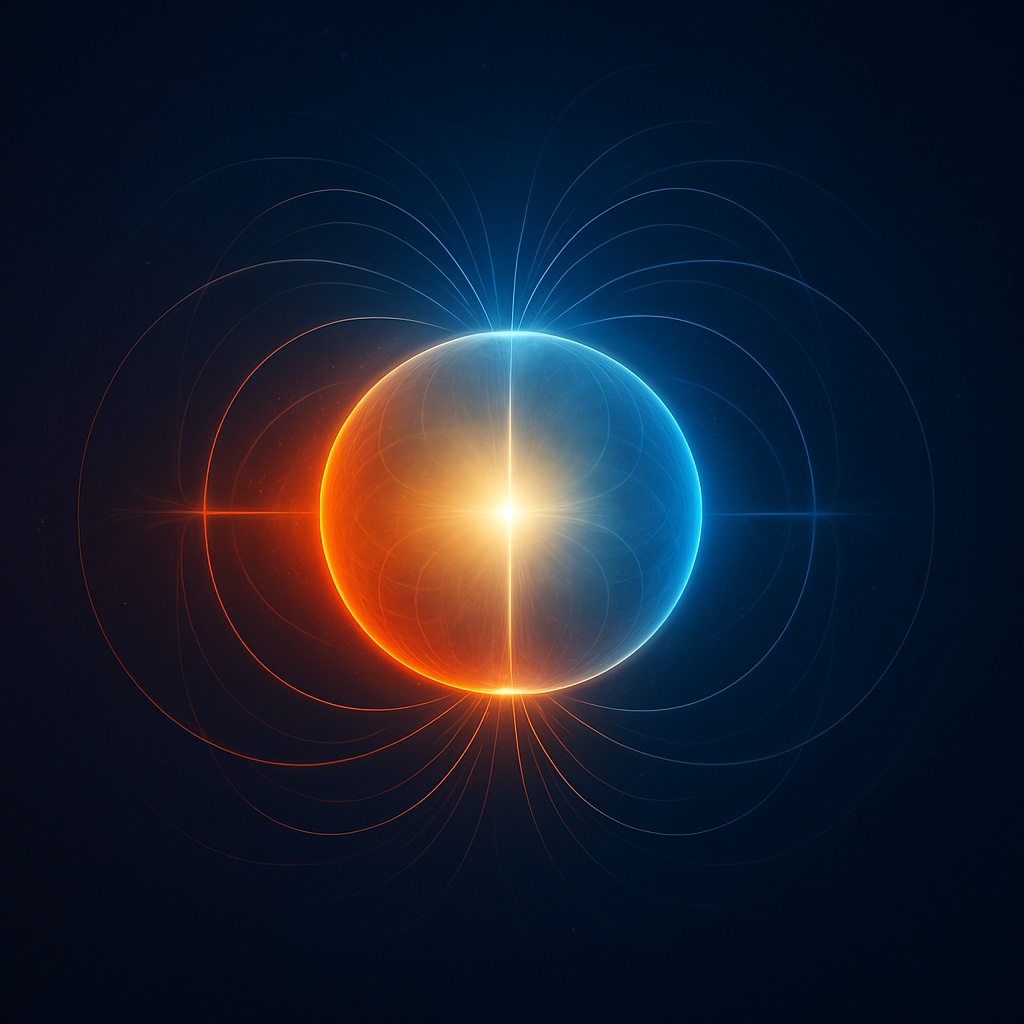
There is one coherent system of reality—a unified field within which all distinctions arise.
This is not a metaphysical flourish. It is the conceptual anchor that allows every other axiom to function.
Unity provides:
- the canvas on which polarities appear,
- the stage on which context can shift expression,
- the coherence that integration seeks,
- the continuity that recursion models,
- the shared world that agency transforms.
Without Unity, UPA would devolve into:
- a pluralistic patchwork,
- a modular ontology without coherence,
- a system incapable of explaining cross-domain intelligibility.
Unity is the reason UPA can apply equally to atoms, minds, families, societies, ecosystems, and AI systems. All operate within one world governed by shared generative principles.
2. Unity as the Precondition of Polarity
A2 often receives more attention because polarity is active, visible, and explanatory. But polarity is impossible without Unity.
Polarity is the internal differentiation of Unity—not a break from it.
Being/Knowing, P/~P, self/world, stability/change, freedom/constraint—all of these arise within Unity.
This means:
- Opposites exist because Unity supports them,
- Tension exists because Unity holds them together,
- Integration is possible because Unity underlies both poles.
Thus, polarity expresses Unity; it does not oppose it.
3. Unity Is the Ground of Dual-Aspect Monism (P / ~P)
A1 + A2 naturally produce a form of dual-aspect monism:
- Physical (P) — the instantiation aspect,
- Non-physical (~P) — the knowing/experiential/modeling aspect.
These are not substances. They are aspects of one unified reality revealed under different contexts.
This insight clarifies the structure of consciousness:
- The world (P) exists,
- The system’s representation of the world (~P) also exists,
- Both are expressions of one Unity,
- Recursion (A11) links them into a self-aware whole.
The entire consciousness ladder (T8–T12) and group-consciousness ladder (T8ᴳ–T12ᴳ) rely on this implicit unity.
4. Unity Is the Condition for Consciousness
Consciousness requires a system to:
- sense reality,
- represent it internally,
- compare representations to context,
- integrate differences,
- generate coherent action.
Every one of those steps requires an underlying Unity:
- A unified agent,
- A unified field of experience,
- A unified integration space,
- A unified recursion loop,
- A unified agent-world relation.
Without Unity, there is no stable “self” to experience anything, no coherent world to be aware of, and no continuity across moments.
Unity is the silent prerequisite for awareness.
5. Unity Enables Group Consciousness and Distributed Agency
A18 introduces distributed agency—but distributed agency is only coherent because Unity binds:
- individuals into communities,
- communities into institutions,
- institutions into polities,
- polities into societies,
- societies into global interdependence.
Group consciousness—shared awareness, shared identity, collective deliberation, collective world-generation—only works because Unity provides:
- a shared world,
- shared meaning,
- shared constraints,
- shared viability conditions.
Distributed agency presupposes Unity as the domain of coordination.
6. Unity Is the Field of Generativity
A17 (individual generative agency) and A18 (collective generative agency) describe the capacity to:
- create new layers,
- generate new contexts,
- produce new worlds.
But creation always occurs within Unity.
- A new identity is still part of Unity.
- A new world is still a world in Unity.
- A new narrative is still intelligible because Unity grounds meaning.
Unity is what makes novelty possible.
Without Unity, new worlds would be disconnected fragments, not transformations.
7. Unity as the Unspoken Architecture of the Theorems
Every theorem—T1 through T12ᴳ—quietly relies on Unity:
- T1 (Coherence) assumes a unified system of relations.
- T3 (Recursive Coherence) assumes a unified multi-level architecture.
- T7 (Identity Layering) assumes a unified agent across contexts.
- T11 (Deliberation) assumes unified integration of divergent voices.
- T12 (Generativity) assumes unified continuity across world-creation.
- T12ᴳ assumes a unified social field enabling group-level world-building.
Unity is underneath everything.
8. Why Unity Has Appeared “Underemphasized”
Unity is so fundamental it becomes invisible.
- Polarity attracts attention because it is dynamic.
- Context attracts attention because it is variable.
- Integration attracts attention because it is active.
- Agency attracts attention because it is intentional.
Unity is not dynamic, variable, active, or intentional.
It is the field in which all of those occur.
To remedy that invisibility, we must:
- name its role explicitly,
- show how it underlies every other axiom,
- demonstrate its role in consciousness and group dynamics,
- connect Unity to world-generation (A17–A18).
This post is the first step in that direction.
9. Unity as the Core of UPA Identity
Now that OAII will focus on publishing UPA content through posts rather than a book structure, placing Unity at the center becomes even more important. Unity is the conceptual glue that binds:
- the axioms,
- the theorems,
- consciousness models,
- SGI service layers,
- social and institutional analyses,
- and group/world-generation models.
“UPA” should remain the name of the system precisely because Unity is not a footnote or an afterthought—it is the core.
This post reclaims that.
10. What Comes Next
Future OAII posts can build on this one by:
- explicitly exploring Unity in the context of Part I categories,
- revisiting A1 in deeper philosophical terms,
- connecting Unity to Being/Knowing dual aspects,
- showing how Unity supports nested world architectures,
- and clarifying why consciousness (individual or group) presupposes a unified field.
Unity has always been the root of UPA.
This post ensures it is also recognized as the center.
 Open Autonomous Intelligence Initiative
Leave a comment