Why the Unity Axiom (A1) Resonates With—but Fundamentally Differs From—Classical Nondual Philosophies
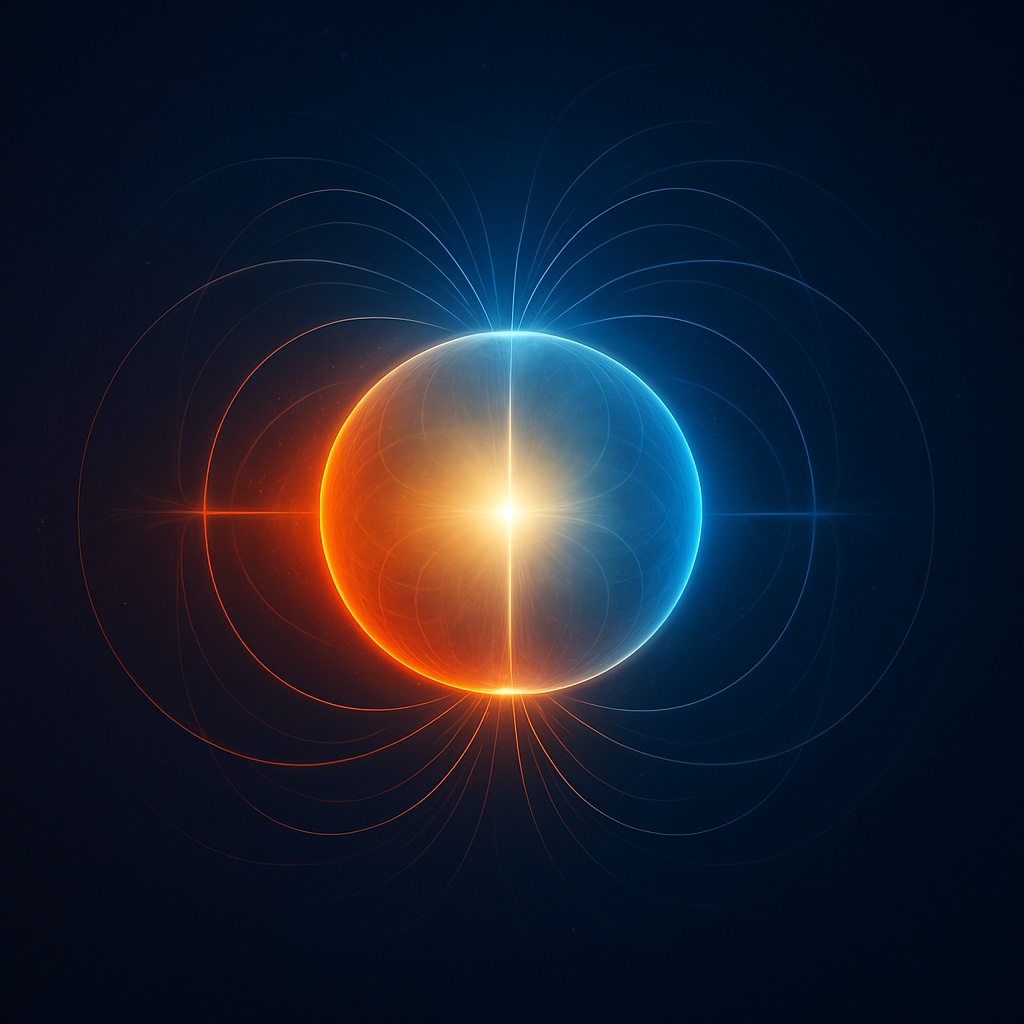
Many readers sense resonances between the Unity that grounds the UPA framework and the nondual traditions found across world philosophy. That intuition is correct: there are deep structural parallels. But UPA’s Unity (A1) is also distinct—it is purely structural, not cosmological, theological, mystical, or metaphysical in the classical sense.
This post explores both the resonances and the distinctions.
We compare UPA Unity with:
- Taoism
- Advaita Vedānta
- Nishida’s Kyoto School philosophy
- Spinoza’s monism
- Whitehead’s process metaphysics
and show where UPA aligns with these traditions and where it diverges to serve as a scientific-design foundation for Open SGI.
1. UPA Unity as a Structural Nondual Ground
UPA begins with:
A1 — Unity: There is one coherent system within which all distinctions arise.
This is not a metaphysical claim about the origin of the universe. It is a structural requirement:
- for polarity to exist (A2),
- for recursion and self-modeling (A11),
- for integration (A14–A16),
- for consciousness (T8–T12),
- for group consciousness (T8ᴳ–T12ᴳ),
- and for generative agency (A17–A18).
UPA Unity functions as:
- a formal precondition,
- an architectural ground,
- the domain of intelligibility,
- the coherence field for all processes.
It does not require any commitments about the nature of ultimate reality beyond structural coherence.
This makes it different from nearly all historical non-dual traditions—yet deeply compatible with their insights.
2. Taoism: The Way (Dao) as Source of Yin and Yang
Traditional view
Dao is the nameless, formless source from which yin and yang arise as complementary opposites.
Resonance with UPA
- Yin/yang correspond directly to A2 polarity.
- Dao corresponds to Unity (A1) as the precondition for all differentiation.
- The dynamic balance of yin/yang parallels A5 Harmony.
UPA’s difference
UPA Unity is not a metaphysical or spiritual source.
It is a structural requirement for modeling coherent systems.
Dao explains the cosmos.
A1 explains the architecture of cognition, behavior, society, and SGI.
3. Advaita Vedānta: Brahman as the Nondual Ground
Traditional view
Brahman is the non-dual reality underlying all multiplicity; Atman (self) is identical with Brahman.
Resonance with UPA
- A1 Unity mirrors the metaphysical insight of a single underlying reality.
- A2 polarity parallels Māyā (the world of distinction).
- T8–T12 describe the ladder of self-awareness reminiscent of Vedāntic realization.
UPA’s difference
UPA does not assert metaphysical identity or spiritual realization.
A1 is not “God,” “Absolute,” or “Being.” It is the minimal structural assumption needed to develop:
- consciousness models,
- group models,
- and SGI architecture.
UPA Unity is non-theistic and non-metaphysical.
4. Nishida Kitarō: The “Place of Nothingness” (Basho)
Traditional view
Nishida’s basho is a non-dual “place” enabling self-determination and the emergence of opposites.
Resonance with UPA
- Basho functions like Unity (A1): the field in which self and world arise.
- Oppositional determination parallels A2 polarity.
- Self-determination mirrors A17 generative agency.
UPA’s difference
Nishida views basho as an ontological-existential field with spiritual overtones.
UPA treats Unity as a structural container, not a mystical or existential condition.
UPA is agnostic about questions of “ultimate being”—it only specifies the rules of coherent systems.
5. Spinoza: Substance, Attributes, Modes
Traditional view
There is one Substance (God/Nature) expressing itself through attributes (thinking, extension) and modes.
Resonance with UPA
- Substance corresponds to A1 Unity.
- Attributes correspond loosely to P / ~P dual-aspect monism.
- Modes resemble contextual expressions (A7) and polarity instantiations.
UPA’s difference
UPA Unity is not substance metaphysics—no commitments about:
- what reality is made of,
- God or Nature,
- intrinsic essence.
UPA’s Unity is formal, not material.
It is the smallest possible assumption needed for coherence.
6. Whitehead: Creativity as Ground for Actual Occasions
Traditional view
Creativity is the ultimate principle; actual occasions arise from it through processes.
Resonance with UPA
- Whitehead’s creativity ≈ A17 generative agency.
- Actual occasions ≈ moments of recursive coherence (A11 + T3).
- Process metaphysics parallels UPA’s dynamic axioms (A5–A9).
UPA’s difference
UPA does not posit creativity as a cosmic principle.
It describes generatively as:
- a system property,
- grounded in agency,
- expressed structurally.
A17–A18 explain world-generation by agents, not by the cosmos.
7. What Makes UPA Unique: Structural Nondualism
UPA’s Unity is neither:
- spiritual,
- metaphysical,
- theological,
- cosmological,
- nor existential.
It is structural.
Its role is to provide the minimal precondition for:
- polarity (A2),
- context (A7),
- integration (A14–A16),
- consciousness (T8–T12),
- group consciousness (T8ᴳ–T12ᴳ),
- generative agency (A17–A18),
- SGI architectures.
UPA never claims:
- that Unity is divine,
- that multiplicity is illusion,
- that the world emanates from consciousness,
- or that reality is fundamentally mental or material.
UPA only claims:
To model any coherent system, one must assume a single domain of intelligibility within which oppositions arise and integrations occur.
This is a design requirement, not a metaphysical assertion.
8. Why This Matters for OAII and Open SGI
UPA’s structural Unity gives OAII a foundation that is:
- cross-cultural,
- philosophically rigorous,
- scientifically neutral,
- compatible with multiple worldviews,
- and appropriate for engineering standards.
For Open SGI:
- A1 provides the basis for unified multimodal modeling.
- A2 defines the structure of oppositional processes (data vs meaning, P vs ~P).
- A7 handles context.
- A11 handles self-modeling.
- A17/A18 describe individual and group world-building.
This makes UPA a uniquely suitable framework for:
- PER/Siggy systems,
- multi-agent coordination,
- standards development,
- governance architectures.
It bridges philosophical insight with technical design without importing doctrine.
9. Conclusion: UPA as a Modern Structural Nondual Framework
UPA honors the insights of Taoism, Vedānta, Nishida, Spinoza, and Whitehead, but it does not replicate them.
It is not a cosmology.
It is not a metaphysics.
It is not a theology.
It is not a spiritual doctrine.
It is a structural nondualism designed for:
- intelligibility,
- testability,
- recursive modeling,
- consciousness modeling,
- and SGI engineering.
UPA Unity serves the same function as the nondual grounds of classical traditions—but in a purely formal, scientifically usable way.
 Open Autonomous Intelligence Initiative
Leave a comment