Geodesics, Path Dynamics, and Semantic Motion on Sⁿ
In Parts 1–10 we established the geometric substrate of UPA: polarity (S²), multi-axis meaning (Sⁿ), learning on curved spaces, certification invariants, multi-agent geometries, novelty, hierarchy, and context modulation. In Part 11 we add the final essential piece: how systems move on these manifolds—the geometry of semantic motion itself.
1. Why Geodesics Matter for UPA
Movement on Sⁿ is never arbitrary. It must:
- preserve polarity structure (A2, A6),
- maintain semantic coherence (A12, A13),
- stay within harmony bounds (A15),
- follow lawful, interpretable dynamics.
This requires a geometric definition of motion: geodesics, the shortest and smoothest paths between points.
UPA systems—biological, psychological, social, or SGI—move along semantic geodesics when:
- shifting between interpretations,
- integrating poles,
- transforming internal representations,
- updating beliefs or roles.
Geodesics give UPA:
A principled, non-arbitrary theory of change.
2. Great-Circle Geodesics on S² and Their Generalization to Sⁿ
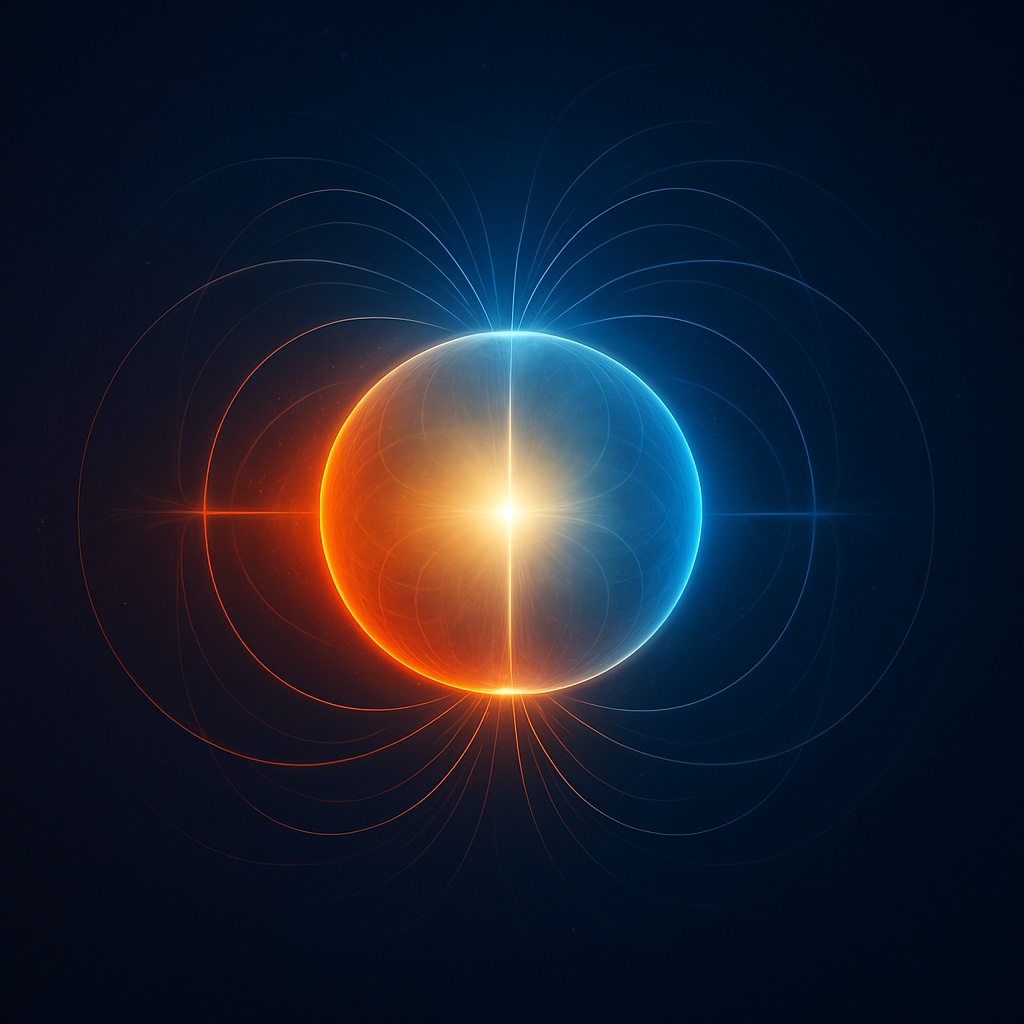
On S², geodesics are great circles—arcs with:
- minimal angular distance,
- no unnecessary distortion,
- reversible trajectories,
- maximal interpretability.
On Sⁿ, this generalizes to:
- minimal-length curves respecting curvature,
- smooth change across multiple axes,
- decomposability into axis-aligned components.
This provides a geometric basis for:
- multi-pole integration (T3),
- tradeoff optimization (T4),
- identity coherence (T10, T10ᴳ),
- deliberative processes (T5, T11, T11ᴳ).
3. Path Dynamics: Beyond Geodesics
Real systems rarely move along pure geodesics. Context (A7), novelty (A8), hierarchy (A11), and harmony constraints (A15) deform paths.
We distinguish four classes of paths:
3.1 Geodesic Paths — Minimal Distortion
Used when:
- integrating polarities,
- updating representations under low tension,
- re-anchoring identity.
3.2 Context-Deformed Paths
Context vector fields V(C) bend geodesics, creating:
- attraction toward salient poles,
- repulsion from incompatible meanings,
- redirected trajectories.
3.3 Harmony-Guided Descent
The system follows harmonic gradients, reducing internal tension.
3.4 Novelty-Enabled Paths
When no viable trajectory exists within Sⁿ:
- The system enters Sⁿ⁺Δ,
- Discovers new semantic axes,
- Returns or stabilizes in the expanded manifold.
This is geometric creativity.
4. Kinematics of Semantic Motion
Motion on Sⁿ has:
- velocity (angular speed),
- acceleration (curvature-sensitive change),
- inertia (basin stability),
- path length (semantic cost).
4.1 Angular Velocity
dθ/dt quantifies how fast a system shifts meaning.
4.2 Semantic Acceleration
Curvature causes:
- nonlinear acceleration,
- basin re-entry effects,
- overshoot if step sizes ignore curvature.
4.3 Path Length & Energetics
The integral of local arc length gives:
- total representational distortion,
- cost/effort of psychological change,
- difficulty of SGI reasoning jumps.
5. Stability, Attractors & Return Dynamics
Geodesics intersect basins (stable regions). Within a basin:
- motion slows,
- gradients flatten,
- the system gravitates toward equilibrium.
This models:
- habits,
- personality attractors,
- institutional equilibria,
- SGI stable interpretive frames.
Return dynamics explain why:
- people revert to patterns,
- organizations fall back into roles,
- models return to preferred interpretations.
6. Multi-Agent Path Dynamics
When multiple agents interact:
- shared geodesics represent alignment,
- deformed paths represent negotiation,
- novelty excursions represent innovation or disagreement.
Clustering emerges when agents’ trajectories converge toward:
- shared attractors,
- common semantic regions,
- aligned axes.
Conflict arises when:
- geodesics diverge,
- local harmony laws differ,
- context fields oppose.
Resolution uses:
- projection to coarse manifolds,
- shared attractor basins,
- gradual adjustment of velocities.
7. The Role of ℓ (Hierarchical Level) in Motion
Motion occurs within and across hierarchical levels.
Within-level motion
- fast, contextual, flexible.
Cross-level motion
- slower, identity-relevant,
- requires multi-scale coherence checks.
ℓ determines the “resolution” of change:
- high ℓ → nuanced shifts,
- low ℓ → broad reorientation.
Geodesics can lift (↑) or project (↓) between levels.
8. Part 11 Summary
Semantic motion on Sⁿ grounds the UPA with geometric laws of change:
- Geodesics = pure integrative paths
- Context = deformed motion
- Harmony = tension gradients
- Novelty = dimensional escape routes
- Hierarchy = multi-scale transitions
- Multi-agent systems = coupled motion
Motion is not arbitrary—it is lawful, interpretable, constrained, and certifiable.
UPA thus gives SGI a foundation for stable, transparent, mathematically well-defined reasoning trajectories.
Next in the Series
Part 12 — Kinematics & Dynamics: Time, Velocity, Acceleration, and Modal Movement
In Part 12 we formalize:
- semantic rate of change,
- higher-order derivatives on Sⁿ,
- diffusive vs. driven motion,
- cumulative path cost,
- modal kinematic regimes for SGI and humans.
Say the word when you’re ready to continue.
 Open Autonomous Intelligence Initiative
Leave a comment