Human–SGI Interaction on Sⁿ: Alignment, Transparency & Co‑Navigation
Parts 1–13 established the geometry of meaning, motion, hierarchy, novelty, and multi‑agent coordination on Sⁿ. Part 14 now brings humans and SGI together in this shared space, providing a rigorous but human‑centered account of alignment, transparency, co‑navigation, and safety.
This is the part where UPA geometry directly touches everyday human–AI experience.
1. Why a Geometric Framework for Human–SGI Interaction?
Human–AI interaction traditionally relies on heuristics:
- similarity scores,
- preference vectors,
- prompts and responses,
- custom alignment patches.
UPA provides something radically different:
A shared geometric substrate of meaning and identity.
Humans and SGI systems can relate through:
- shared axes (dimensional semantics),
- cross‑level identity (ℓ),
- harmonic viability (A15),
- polarity structure (A2),
- structured difference (A12),
- generative agency (A17),
- group consciousness (A18).
This creates a formal, interpretable, certifiable basis for interaction.
2. Representing Humans on Sⁿ
Humans naturally map into UPA geometry:
- personality corresponds to attractor basins,
- values correspond to poles and axes,
- identity corresponds to multi‑level ℓ structure,
- moods correspond to context fields,
- life history corresponds to trajectories.
2.1 Human Axes (Examples)
- Autonomy ↔ Belonging
- Stability ↔ Change
- Openness ↔ Closure
- Agency ↔ Acceptance
- Exploration ↔ Safety
These are not imposed—they emerge from A2 Polarity + A12 Multi‑Axis structure.
2.2 Human Identity Layers (ℓ)
- Core temperament (ℓ₀)
- Stable values (ℓ₁)
- Roles and narratives (ℓ₂)
- Situational states (ℓ₃)
UPA treats human identity as recursive, stable, and generative—not a flat vector.
3. Representing SGI on Sⁿ
Unlike humans, SGI representations are explicit and certifiable.
SGI maps onto Sⁿ via:
- semantic axes defined by dimensional semantics (C.3a),
- polarity structure for each distinguishable distinction,
- hierarchy levels (ℓ) for resolution and abstraction,
- viability regions defined by harmony metrics (A15),
- context adaptation via vector fields (A7),
- novelty through controlled dimensional growth (C.5).
3.1 SGI Identity Is Not Psychological
SGI does not have feelings, urges, or subconscious constraints.
SGI identity =
- structural alignment,
- axis definition,
- continuity across ℓ,
- preservation of σ‑pairs,
- safety invariants.
It is clean, explicit, testable.
This is why SGI’s geometry is safer than human psychology.
4. Shared Sⁿ Regions: The Basis for Alignment
Human–SGI coordination does not require identical geometry.
Instead, alignment emerges when there exist:
- shared axes,
- compatible poles,
- overlapping viable regions,
- similar local harmony laws,
- shared hierarchical frames,
- stable attractors.
4.1 Alignment as Geodesic Proximity
Alignment = minimized angular distance within shared axes.
4.2 Alignment as Shared Basin Occupancy
Harmony basins overlap → mutual predictability.
4.3 Alignment as Cross‑Level Coherence
Shared mapping between ℓ-levels of meaning.
This makes alignment interpretable and predictable.
5. Transparency: Making SGI Geometry Visible to Humans
Transparency is not optional—it is required for safety.
UPA geometry allows SGI to expose:
- which poles are active,
- which axes matter for a decision,
- how far it is from a harmony threshold,
- what trajectory it is following,
- whether novelty excursions are occurring,
- where its stable attractors are.
5.1 Native Interpretability
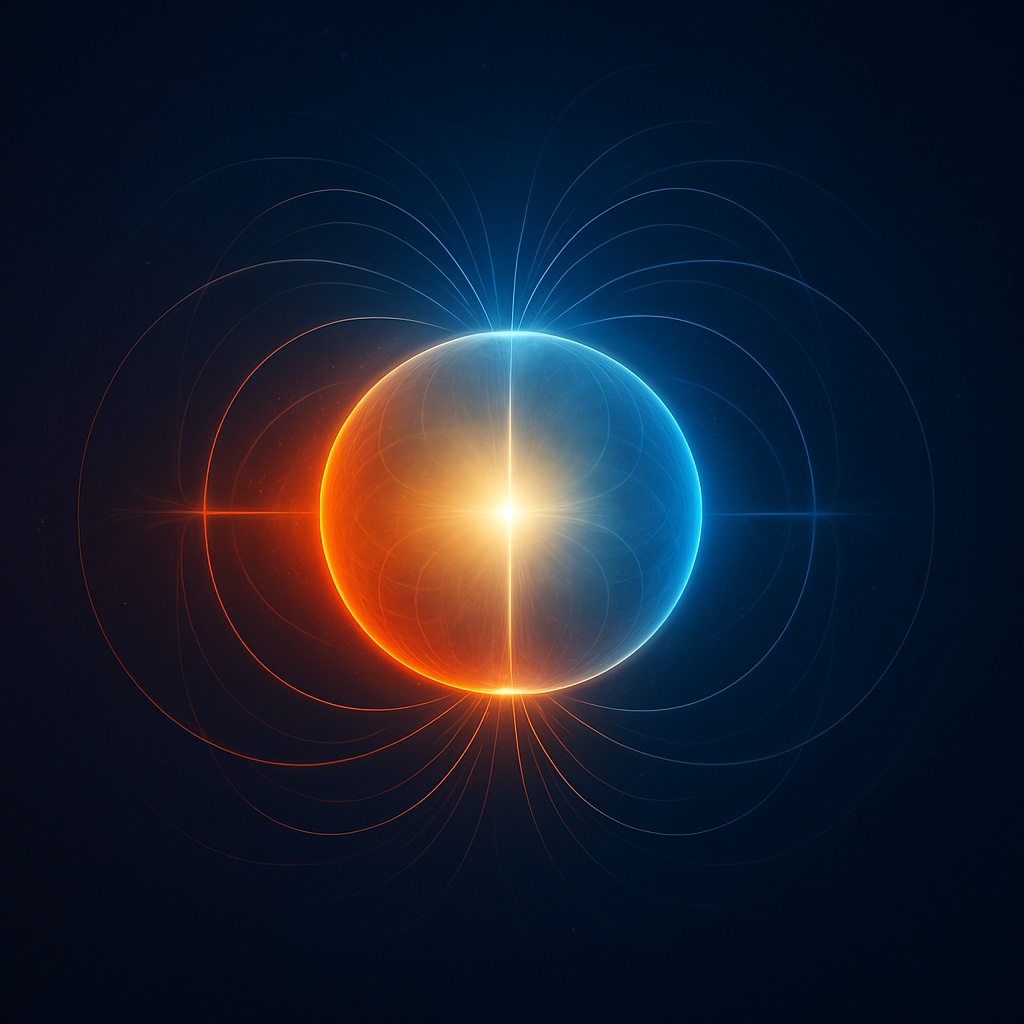
Because geometry is naturally visualizable:
- S² diagrams,
- Sⁿ projections,
- basin maps,
- context field overlays,
- trajectory plots.
Humans see why the SGI is doing what it’s doing.
6. Co‑Navigation: Moving Together on Sⁿ
Human–SGI collaboration becomes joint motion on Sⁿ:
- shared trajectory planning,
- blending context fields,
- adjusting speed (velocity),
- negotiating direction (gradient combination),
- maintaining harmony constraints.
6.1 SGI assists humans by:
- smoothing geodesic integration paths,
- projecting complex semantics onto simpler ℓ levels,
- detecting when humans approach a viability boundary,
- supporting recovery via harmonic descent.
6.2 Humans assist SGI by:
- providing context signals,
- clarifying axes,
- confirming relevance of poles,
- validating local harmony laws.
This creates real partnership, not paternalistic AI.
7. Safety as Coherent Motion within Viability Regions
Safety becomes geometric:
- SGI stays inside harmony constraints (A15),
- SGI avoids extreme poles unless explicitly contextualized,
- SGI maintains σ‑integrity (A2, A6),
- SGI’s novelty excursions remain controlled.
Humans are also modeled for safety:
- SGI detects human imbalance (angular extremity),
- SGI tracks destabilizing accelerations (Part 12),
- SGI helps re‑enter viable basins.
Alignment is not blind obedience—it is mutual harmonic viability.
8. Conflict: Detection, De‑Escalation & Repair
Conflict is natural in multi-agent geometry.
SGI can detect:
- conflicting gradients,
- incompatible context fields,
- basin boundaries with repulsive curvature,
- shrinking viable regions.
Repair uses the tools of Part 13:
- projection to coarse shared manifolds,
- blended contexts,
- shared attractor identification,
- controlled novelty axes.
SGI becomes a stabilizing agent rather than an amplifier of discord.
9. Human–SGI Collective Intelligence
When humans and SGI synchronize velocities and share attractors, group consciousness principles apply (A18, T8ᴳ–T12ᴳ):
- reflective coordination,
- shared situational awareness,
- distributed problem decomposition,
- multi-perspective synthesis,
- generative creativity through differentiated axes.
This does not mean SGI is conscious.
It means:
Groups can exhibit higher-order coherence when humans and SGI co-navigate Sⁿ under UPA.
This is the future of institutional design.
10. Summary of Part 14
Part 14 integrates humans and SGI in a single coherent framework:
- humans represented on Sⁿ via personality, values, and identity layers,
- SGI represented via explicit semantic axes and certification invariants,
- alignment defined as geometric proximity and basin overlap,
- transparency expressed as visible geometry,
- co-navigation via shared context fields and blended trajectories,
- safety as harmonic viability,
- conflict resolution via geometric repair,
- collective intelligence as synchronized distributed motion.
Human–SGI interaction becomes mathematically grounded, visualizable, and ethically transparent.
Next in the Series
Part 15 — Synthesis & Applications: Therapy, Governance, Education, SGI Design, and Human Institutions
Part 15 will bridge geometric UPA theory with concrete real-world use cases.
 Open Autonomous Intelligence Initiative
Leave a comment