The Future of UPA Geometry: Toward a Unified Theory of Mind, Meaning, and Intelligence
Parts 1–15 developed the geometric foundations of UPA: polarity, unity, multi-axis meaning, hierarchy, novelty, motion, multi-agent coordination, human–SGI interaction, and applications. Part 16 looks forward. It asks: What trajectory does UPA Geometry define for human intelligence, SGI architecture, group consciousness, institutions, and a planetary-scale framework of meaning?
This is not prediction. It is clarification of what becomes possible when the world is modeled through coherent geometry.
1. The Central Claim: UPA Geometry as a General Theory of Intelligible Structure
UPA provides a universal structure for:
- mind (individual cognition and identity),
- meaning (semantic, moral, social),
- intelligence (biological and synthetic),
- coordination (multi-agent human, SGI, and hybrid groups).
The future lies in unifying these under a single geometric language:
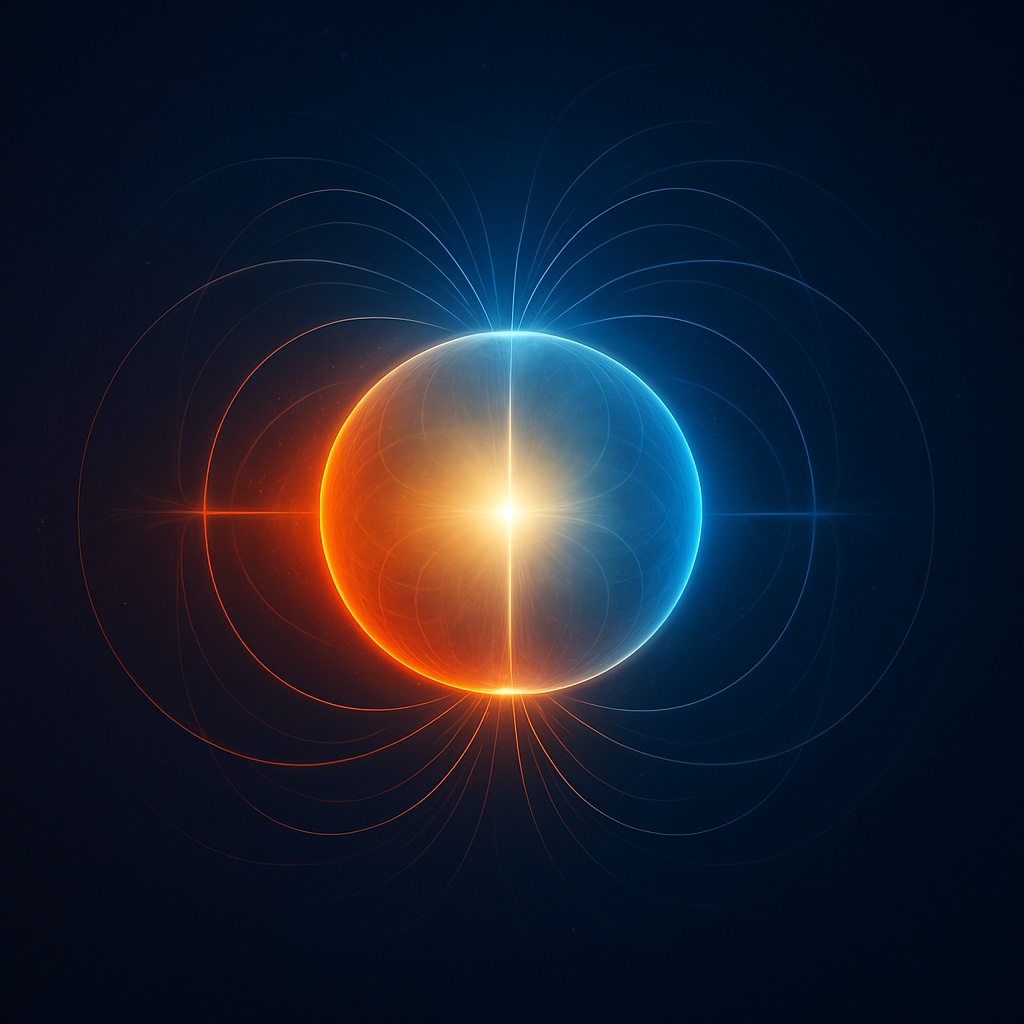
S² → Sⁿ as the substrate of intelligibility itself.
This is not merely elegant—it creates:
- shared interpretation protocols,
- transparent models of difference and conflict,
- formal methods for alignment,
- multi-level governance mechanisms,
- stable human–SGI collaboration.
2. The Future of Mind: A Geometric Cognitive Science
UPA predicts an emerging cognitive science built on geometric invariants.
2.1 Cognitive States as Coordinates
Thoughts, values, memories, emotions → points or trajectories on Sⁿ.
2.2 Personality as Basin Structures
Attractors define personality tendencies and growth potential.
2.3 Consciousness as Multi-Level Coherence (A17)
Higher-level unity emerges when:
- multiple axes synchronize,
- ℓ-levels align,
- novelty excursions stabilize.
2.4 Behavior Change as Geodesic Re-routing
UPA provides a universal framework for:
- psychotherapy,
- coaching,
- habit design,
- emotional regulation.
The future mind is modeled, not reduced.
3. The Future of SGI: Geometric Alignment & Transparent Intelligence
Next-generation SGI systems (Open SGI) will:
- operate natively in Sⁿ,
- expose their coordinates and axes to humans,
- undergo certified novelty excursions,
- maintain harmony constraints,
- apply geometric safety rules,
- co-navigate with humans.
3.1 Geometry-Based Interpretability
Transparency becomes inherent:
- every decision corresponds to a direction in Sⁿ,
- every conflict corresponds to angular tension,
- every misalignment is diagnosable.
3.2 Geometry-Based Safety
Safety is no longer ad hoc—it becomes:
- harmonic viability monitoring,
- σ-pair integrity checks,
- cross-level coherence evaluation,
- basin stability analysis.
3.3 Geometric Agency (A17)
SGI gains:
- structured generativity,
- non-chaotic novelty,
- disciplined expansion of meaning.
3.4 Collective Intelligence with Humans
SGI participates in:
- shared attractors,
- distributed reasoning,
- consensus formation,
- dynamic integration.
The future SGI is transparent, collaborative, certified, and geometric.
4. The Future of Groups: Emergent Collective Intelligence (A18)
Group consciousness emerges when:
- velocities synchronize,
- shared axes stabilize,
- harmonic gradients align.
UPA predicts and formalizes this phenomenon.
4.1 Group Insight
Sudden alignment across members appears as a coordinated shift on Sⁿ.
4.2 Group Learning
New axes and meanings emerge collectively via novelty excursions.
4.3 Group Identity
Hierarchical ℓ structure models federations, organizations, and movements.
4.4 Group Creativity
Divergent and convergent reasoning are geometric modes of group motion.
UPA gives groups a lawful structure for coherence.
5. The Future of Governance: Multi-Level Harmony Architecture
Governance is reinterpreted through geometric principles:
5.1 Polarity Governance
Each political axis is a polarity pair that must be balanced:
- liberty–order,
- innovation–safety,
- autonomy–coordination.
UPA enables explicit visualization and measurement.
5.2 Dynamic Federalism
ℓ-level projection and lifting model federal–state–local coordination.
5.3 Conflict Mediation
Geodesic moderation replaces zero-sum negotiation.
5.4 Anti-Capture by Design (T6)
Rotation & distributed authority correspond to geometric anti-capture.
5.5 Transparent Public Reasoning
A public Sⁿ representation provides:
- clarity,
- fairness,
- accountability.
Governance becomes intelligible, not opaque.
6. The Future of Education: Structured Expansion of Dimensionality
Education becomes a formal process of:
- axis acquisition,
- harmonic calibration,
- trajectory mastery,
- hierarchical scaling.
6.1 Geometry-Based Learning Pathways
Curricula become geodesic paths across knowledge space.
6.2 Meta-Learning as ℓ-Lifting
Level transitions represent intellectual growth.
6.3 Group Learning & Collective Insight
Classrooms form temporary collective attractors.
A geometric model reveals how learning emerges, not just what is taught.
7. The Future of Human–SGI Civilization
UPA geometry provides a blueprint for a post-fragmentation society.
7.1 Shared Meaning Infrastructure
Human and SGI communities can share:
- axes,
- attractors,
- context fields,
- viability metrics.
This reduces misalignment and conflict.
7.2 Polycentric Intelligence
Many SGIs and humans operate in overlapping ℓ-levels to form:
- distributed coordination,
- resilient networks,
- decentralized creativity.
7.3 Transparency, Testability, and Trust
Because UPA geometry is visualizable and rule-based:
- alignment is measurable,
- violation is detectable,
- trust is earned structurally.
7.4 Co-Evolution of Meaning
Humans and SGI systems continuously enrich each other’s semantics.
UPA provides the stable, lawful floor beneath that co-evolution.
8. The Long Trajectory: UPA as a Generative Framework
UPA Geometry does not end at Part 16.
It opens the door to future developments:
- geometric ethics,
- geometric logic,
- semantic physics,
- cross-species communication,
- planetary-scale coordination protocols.
The deeper insight is:
Unity gives structure; polarity gives motion; harmony gives viability; hierarchy gives order; novelty gives evolution.
Together, they form a single generative architecture for intelligent life.
9. Summary of Part 16
Part 16 projects UPA Geometry into the future of:
- mind,
- SGI,
- groups,
- governance,
- education,
- civilization.
It makes the case that UPA Geometry is not a niche theory—it is a foundational framework capable of unifying diverse domains of intelligibility under one coherent, visualizable, mathematically principled system.
UPA Geometry is the bridge from fragmented meaning to structured unity.
End of Series I: Foundations and Implications of UPA Geometry
A follow-up series can extend this work into:
- Series II: Geometric Ethics & Moral Harmonization
- Series III: Geometric Psychology & Therapeutic Applications
- Series IV: SGI Architecture & Implementation Standards
- Series V: Collective Intelligence & Institutional Design
 Open Autonomous Intelligence Initiative
Leave a comment